How to Negotiate Offers
Secure compensation, equity, and runway with a structured negotiation plan.
Understanding Your Leverage
Successful negotiation starts with understanding your position in the market. Research salary ranges, evaluate multiple offers if possible, and recognize your unique value proposition.
Research Market Rates
- Use salary databases like Levels.fyi and PayScale. Glassdoor is unreliable and unverified, but if there are enough data points and you exclude outliers, it can provide a decent approximation.
- Network with professionals in similar roles--friends and colleagues can give you an idea of the local market compensation packages, but there is still quite a bit of variability between companies and the perceived value of each new hire.
- Consider location, company size, and industry differences
- Factor in total compensation, not just base salary
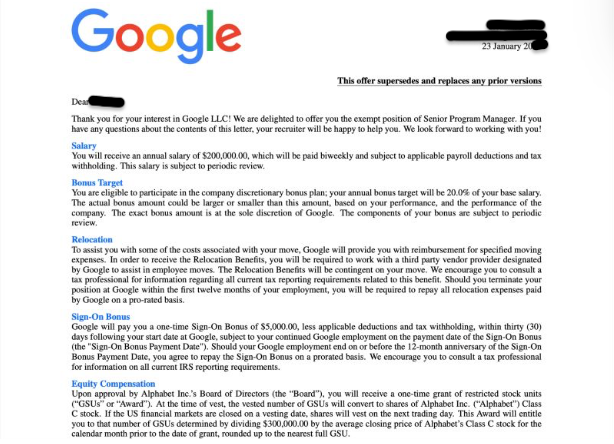
Components of Tech Compensation
Base Salary
Your guaranteed annual income before bonuses or equity. This is typically the easiest component to negotiate and forms the foundation of your compensation package.
Signing Bonus
One-time payment to help offset costs of changing jobs (foregone bonus) or to sweeten the offer. Often negotiable, especially if you're leaving unvested equity behind.
Relocation Allowance
This is often a cash lump-sum amount for moving to a new location, which you can use as you wish for travel, moving services, temporary housing, rental deposit, etc. and keep the remaining cash. Senior management/executives can be offered full relocation (moving) services, real estate closing fee reimbursement, temporary housing, etc.
Annual Bonus
Performance-based compensation as a percentage of base salary in tech roles. Understand the criteria and historical payout rates for the type of firm. Your recruiter can provide guidance, but ultimately, bonuses are determined by the business unit you are hired into and your perceived added value/performance.
Equity Compensation
- Stock Options: Right to purchase company stock at a fixed price
- RSUs (Restricted Stock Units): Grants of company stock that vest over time
- ESPP (Employee Stock Purchase Plan): Ability to buy company stock at a discount
Benefits and Perks
- Health, dental, and vision insurance
- 401(k) matching and retirement plans
- Vacation time and flexible work arrangements
- Professional development budgets
- Equipment and home office allowances
Negotiation Strategies
Before You Negotiate
- Get the offer in writing before negotiating, if possible. Sometimes, HR/Recruiting wants to calibrate/discuss with you about their targeted compensation range (by job title/level) before sending to management for budget/offer approvals.
- Take time to review (24-48 hours is reasonable)
- Identify your priorities and non-negotiables
- Prepare your counter-offer with specific numbers, based on concrete information, not speculation or unverified Internet sources
Negotiation Tactics
- Be collaborative, not confrontational: Frame it as working together to find a mutually beneficial agreement
- Anchor high but reasonably: Start with your ideal outcome but within market range
- Provide justification: Use market data, competing offers, or unique qualifications
- Consider the whole package: Sometimes non-salary benefits are easier to negotiate
Sample Negotiation Scripts
Initial Counter-Offer
"Thank you for the offer. I'm excited about the opportunity to join [Company]. After researching market rates for similar positions, I was hoping we could discuss adjusting the base salary to $X. This would be more in line with my experience and the value I can bring to the team."
Multiple Component Negotiation
"I appreciate the comprehensive offer. I'd like to request increasing the base salary to $X and a signing bonus of $Y to offset my targeted bonus and unvested equity. Would the team be open to these adjustments?"
Common Negotiation Scenarios
When They Can't Move on Salary
If base salary is fixed, consider negotiating:
- Signing bonus or first-year bonus guarantee
- Additional equity or accelerated vesting
- Earlier performance review for promotion consideration
- Enhanced benefits or flexible work arrangements
Multiple Offers
When you have competing offers:
- Be honest about having other opportunities
- Don't lie about offer details
- Give your preferred company a chance to match or beat competing offers
- Consider total compensation and growth potential, not just immediate pay
- If you are pressured to make a quick decision and you are pending another offer, ask to make the decision by a slightly later (specific) date you provide--you will need to reply to them with your offer decision by that date.
Avoiding Common Mistakes
- Don't negotiate via email for complex discussions: Schedule a call for nuanced conversations
- Don't give ultimatums unless you're prepared to walk away: Keep the tone collaborative
- Don't focus only on salary: Consider the full compensation package and career growth
- Don't negotiate too many rounds: Make your best case in 1-2 iterations
- Don't forget to express enthusiasm: Reiterate your interest in the role and company
Special Considerations for AI Roles
Rapidly Growing Field
AI and machine learning roles often command premium compensation due to skill scarcity. Use this to your advantage but be realistic about your experience level.
Equity Potential
Consider the long-term potential of AI companies, especially in emerging areas like generative AI, autonomous systems, or AI infrastructure.
Learning Opportunities
In fast-moving AI companies, factor in learning opportunities, access to cutting-edge technology, and career advancement potential.
Closing the Deal
Once you've reached an agreement:
- Get the final offer in writing
- Review all details carefully before accepting--politely ask HR any questions you have
- Express gratitude and enthusiasm
- Confirm your start date and any remaining logistics
- Notify other companies promptly and professionally. Keep the door open to possibly working with them in the future.